Commentary: HPV, the silent virus behind cervical cancer
SINGAPORE: Cervical cancer is one of the most normally diagnosed cancer among women in Singapore. A worrying upward tendency tin be seen from the Singapore Cancer Registry report from 2022 to 2015.
A recent national survey past the Ministry building of Health (MOH) also showed an increment in Singaporean women aged 30 and above diagnosed with late-stage cervical cancer, with no improvements in the uptake of cervical cancer screening among Singaporean women.
SILENT KILLER
Cervical cancer is a silent killer. It usually has no symptoms and when they practise manifest, the cancer is already in its late stages.
Despite having an constructive vaccine and screening tool, cervical cancer remains an epidemic worldwide, as the fourth most common gynaecological cancer globally, peculiarly in developing countries.
While cervical cancer screening remains a pivotal player in the prevention of this disease, it has to work together with an effective Homo Papillomavirus (HPV) vaccination program.
MOVES TO STRENGTHEN CERVICAL CANCER SCREENING
In May 2018, the World Wellness Arrangement'south (WHO) Director Full general Dr Tedros Adhanom Ghebreyesu called for the world to commit to a total eradication of cervical cancer.
In a timely move towards WHO's goal, the MOH appear concluding Tuesday (Mar 5), the launch of the free HPV vaccination programme for Secondary 1 girls.
Singapore now stands alongside 50 other countries, such as Australia, Canada, Finland, Sweden, Malaysia and the United Kingdom in the global fight confronting cervical cancer.
Along with this annunciation, MOH also introduced a more sensitive cervical cancer screening tool to detect pre-cancerous cervical lesions.
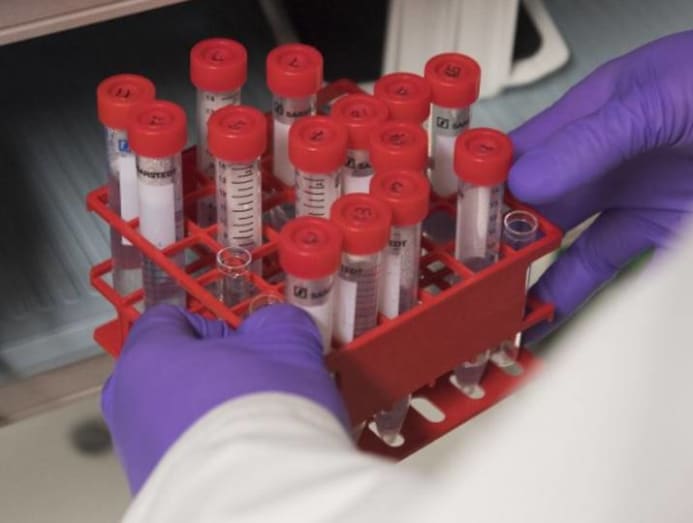
A HPV Dna examination which needs to be carried out every five years will replace the pap smear exam, which must be done every three years, as the new national cervical cancer screening protocol for women anile 30 and above.
PERSISTENCE OF HPV VIRUS
The HPV is a grouping of double-stranded DNA viruses extremely common worldwide and can be transmitted through skin contact including genital contact.
Women and men who are sexually active will exist infected by this virus at some indicate in their life, though this does not mean that penetrative sex is a necessity for transmission.
At that place are more than 100 types of HPV. Fourteen are recognised to cause cancer. Amongst them are the HPV 16 and eighteen types, which cause 70 per cent of cervical cancer and pre-cancerous lesions.
Acute infection including cancer-causing HPV infection does not increase the risk of developing cervical cancer. The issue lies in the persistence of the HPV infection.
THE HPV VACCINE AND CERVICAL CANCER PROTECTION
The HPV vaccine is a safety vaccine. It protects the host against time to come cancer-causing HPV infections. It is a viral-like particle, and allows the vaccine to confer amnesty without infecting the host.
It has a strong rubber profile. The virtually reported adverse effect is pain where the injection occurs.
There are iii HPV vaccines available worldwide; the bivalent, quadrivalent and nanovalent.
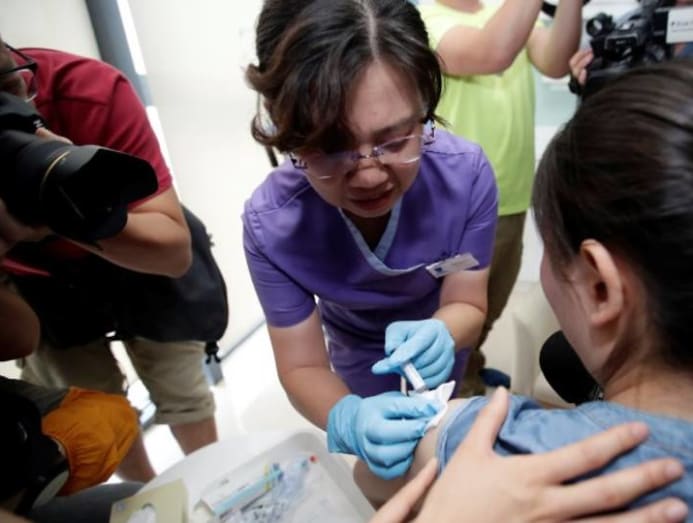
HPV vaccines are extremely constructive in preventing the development of cervical cancer precursors, offering over 90 per cent protection. But none of these HPV vaccines will provide 100 per cent coverage.
Hence, regular cervical cancer screening must still be carried out considering it can assistance to protect against other cancer-causing HPV infections not covered by the vaccine.
Early on VACCINATION IS Cardinal
Still, adopting a schoolhouse HPV vaccination program is a crucial motion towards the goal of eliminating cervical cancer. Protection is at its best if the vaccine is administered earlier a woman becomes sexually agile.
In Singapore, the HPV vaccine is approved for utilise for young women aged nine to 26 under the National Babyhood Immunisation Schedule, with Medisave coverage of up to South$400.
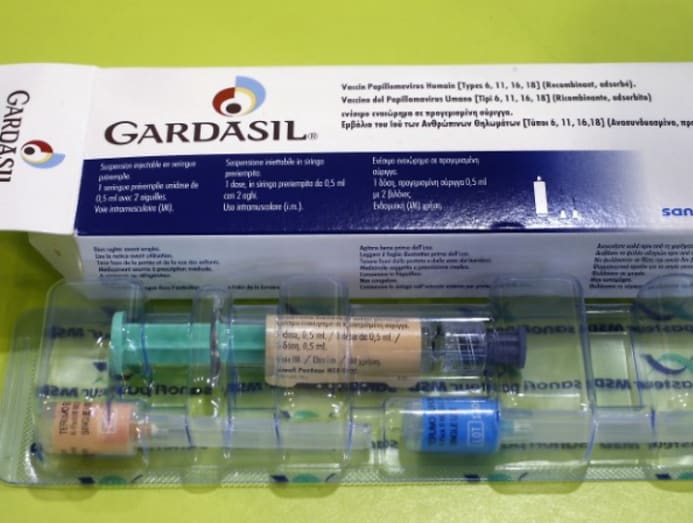
Women upwardly to the age of 45, who are already sexually active, with previous history of aberrant pap smear results or take been treated for pre-malignant cervical lesions, may also benefit from the vaccine. In Oct 2018, the US Food and Drug Association (FDA) canonical Gardasil nine to be given to women up to 45.
HPV VACCINATION IN SINGAPOREAN MEN
There is likewise emerging evidence of a causal relationship betwixt a neoplasm-causing HPV infection and the development of cancer in the anus, vulva, vagina, penis and oropharynx. HPV 16 is known to increase the risk of anal, penile and oropharyngeal cancers in men.
There is also emerging evidence regarding herd immunity and farther reduction of cancer-related HPV infection in girls when the vaccination is too given to boys. Australia has adopted a gender-neutral school HPV vaccination plan and this has resulted in a significant reduction of their cervical cancer and HPV infection rates.
READ: HPV vaccine is condom, says cancer agency, slams 'unfounded rumours'
In Singapore, Gardasil and Gardasil 9 are licensed to be given to boys betwixt ix to 26 for protection confronting genital warts and anal pre-cancerous lesions.
Instruction AND Awareness
Cervical cancer is unique in that we non just at present know its main causes just besides its long natural history, which allows the states to have an extremely effective prevention and screening tool to totally eradicate the affliction in Singapore.
Nonetheless, teaching and sensation are important aspects of our efforts.
It is not enough to just have these tools. As a nation nosotros need to commit to using these tools as effectively as possible, to empower and protect our women from this terrible disease.
Dr Ida Ismail-Pratt is Consultant at National University Cancer Institute, Singapore's Division of Gynaecologic Oncology.
Source: https://cnalifestyle.channelnewsasia.com/commentary/commentary-hpv-silent-virus-behind-cervical-cancer-299486
0 Response to "Commentary: HPV, the silent virus behind cervical cancer"
Post a Comment